
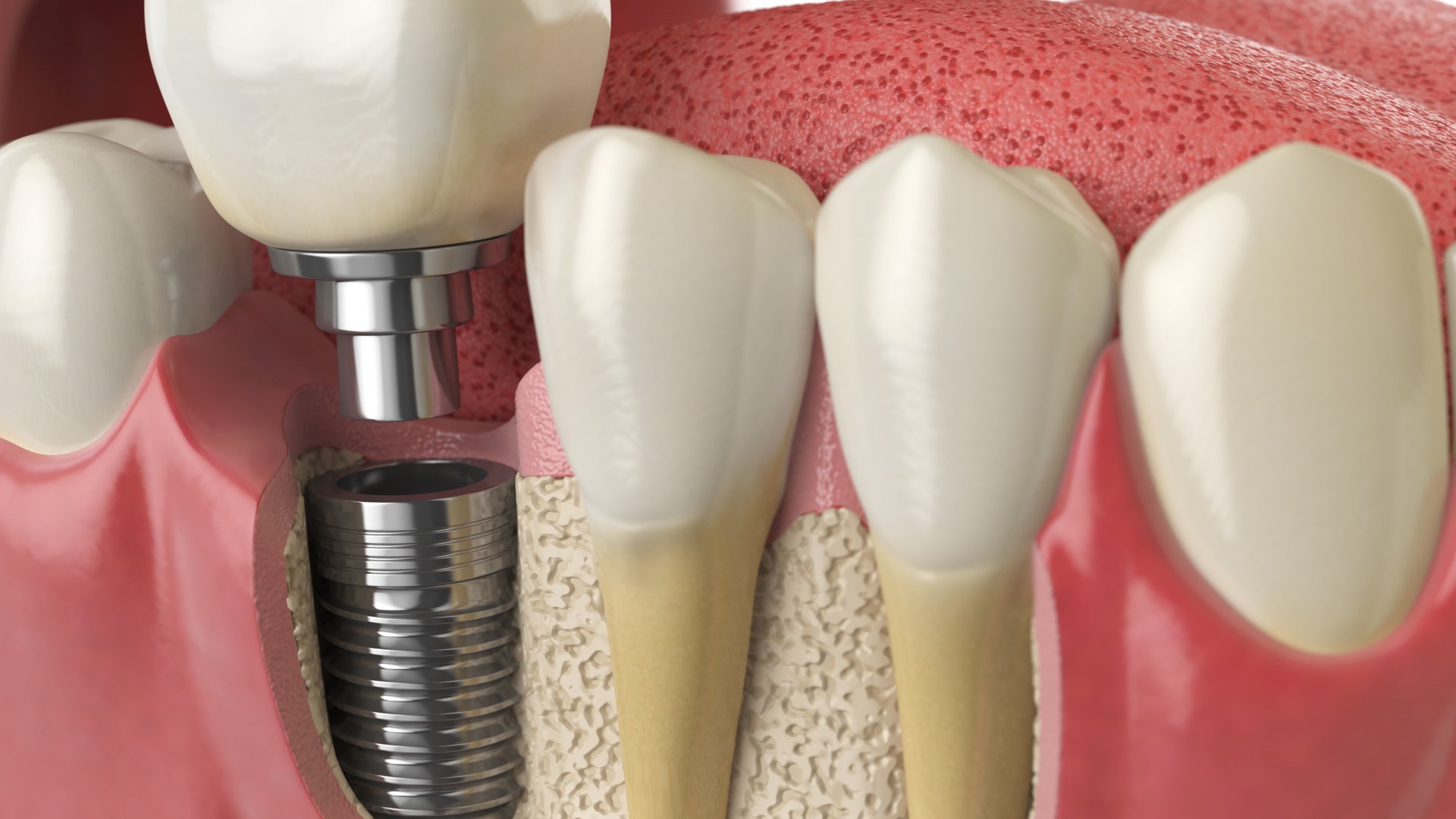
Implantology is a branch of dentistry that involves the placement of dental implants to restore lost teeth both functionally and aesthetically. This field is based on the use of biocompatible titanium screws placed into the jawbone, which serve as artificial supports that replace the function of natural tooth roots. Today, implantology has become a modern treatment option not only for single-tooth loss but also for complete edentulism.
Fundamental Principle of Implantology
Dental implants are based on the principle of osseointegration—the biological integration with jawbone. In this process, once the implant is placed into the bone tissue, it integrates with the bone over several months and functions as a permanent artificial root. The biocompatible titanium surface is not recognized by the body as a foreign material, which allows the implant to be used for many years. The aim of implantology is not only to replace a missing tooth. It also includes the following objectives:
- To prevent jawbone loss
- To maintain the position of adjacent teeth
- To restore chewing function
Indications and Treatment Process
Dental implant therapy can be applied in a wide range of situations, from single-tooth loss to full-arch prosthetic restorations (complete denture restorations). The treatment process generally consists of several stages:
a) Evaluation and Planning
Using imaging techniques such as panoramic radiographs and CBCT (Cone Beam Computed Tomography), the bone volume and density are evaluated. During this phase, the implant length, diameter, angle, and placement position are determined.
b) Surgical Procedure
The procedure, performed under local anesthesia, typically takes 30 to 60 minutes. The implant is placed into the prepared socket in the jawbone and closed with sutures. Afterward, the osseointegration process begins and usually takes 2–3 months.
c) Prosthetic Phase
Once the implant has fused with the bone, a healing cap and an abutment are placed. In the final stage, prosthetic crowns made of porcelain, zirconium, or E-max crowns are prepared to match the patient’s tooth color. Upon completion, the implant becomes as strong and functional as a natural tooth root.
Implant Types and Techniques
Advances in modern dental technology allow implantology to be performed using various systems and techniques.
a) Classic Two-Stage System
In the first stage, the implant is placed into the alveolar bone, and a healing period is allowed for osseointegration. After the healing process is completed, the prosthetic phase is initiated. This method is the most commonly preferred and one of the most reliable techniques.
b) One-Stage Implants
The abutment is placed simultaneously with the surgery. This approach may shorten the healing period, although it may not be suitable for every clinical case.
c) All-on-4 and All-on-6 Systems
In cases of complete edentulism, 4 or 6 implants per jaw are placed to support a fixed prosthesis. These systems utilize the strongest areas of the bone and allow a temporary prosthesis to be placed on the same day.
d) Mini Implants
Used in patients with narrower bone structures or to improve the retention of removable dentures. They involve minimal surgical trauma and have a shorter healing period.
Modern Technologies Used in Implant Surgery
Today, implantology has evolved into a highly precise surgical field that is digitally planned. Modern techniques used in clinics include:
- Digital tomography (CBCT): Provides three-dimensional (3D) bone analysis.
- Navigation-guided surgery: The angle and depth of the implant are determined with millimetric accuracy through computer-assisted planning.
- Laser surgery: Ensures minimal bleeding in the soft tissues and promotes faster healing.
- Guided surgery: The implant position is pre-planned using a custom-made surgical guide designed for the patient.
Thanks to these technologies, surgical time is reduced, tissue trauma is minimized, and the risk of complications is significantly decreased.
Recovery Process, Oral Care, and Possible Complications
Following implant treatment, the osseointegration process is crucial for the success of the treatment. During this period, factors such as smoking, uncontrolled diabetes, or poor oral hygiene may negatively affect healing. The following points should be considered during the recovery period:
- Hot foods should be avoided within the first 48 hours.
- Alcohol and smoking can delay tissue healing by affecting blood circulation.
- Soft foods should be preferred.
- Antibiotics or painkillers should not be taken without the dentist’s recommendation.
Although complications are rare, conditions such as inflammation around the implant (peri-implantitis), bone loss, or implant mobility may occur. Therefore, regular examination and professional dental cleaning are of great importance.
Implantology is a modern treatment method that restores the functional and aesthetic losses caused by tooth loss. Thanks to biocompatible materials, digital planning systems, and precise surgical techniques, implant treatments today have high success rates. With proper planning, appropriate surgical techniques, and regular oral care, dental implants can provide durability and comfort comparable to natural teeth for many years.