
Orthodontics is a branch of dentistry that focuses on the proper positioning and alignment of the teeth and jaws. This field aims not only to enhance dental aesthetics but also to improve chewing function, speech, and the long-term maintenance of oral health. Today, orthodontic treatments are available in a wide range of options, from conventional metal braces to virtually invisible clear aligner systems.
Aims and Scope of Orthodontic Treatment
Orthodontic treatment is performed to align the teeth within the jawbone and to correct the occlusal relationship between the upper jaw (maxilla) and lower jaw (mandible).
The main objectives of orthodontic treatment are:
- To achieve proper alignment of the teeth
- To correct the occlusal relationship between the upper and lower jaws
- To improve chewing and speech functions
- To facilitate oral hygiene and maintain the health of the teeth and the gingiva
Dental conditions such as crowding, spacing, and proclination or retroclination of the teeth may result from genetic factors, premature loss of deciduous teeth, or habits such as mouth breathing. Early detection of these dental irregularities allows treatment to be shorter and more effective.
Orthodontic Treatment Methods
The treatment methods used in orthodontics vary depending on the patient’s age, dental structure, and aesthetic expectations. In general, they are classified into two main groups: fixed orthodontic appliances (braces) and removable appliances (clear aligners).
Fixed Orthodontic Appliances (Braces Treatments)
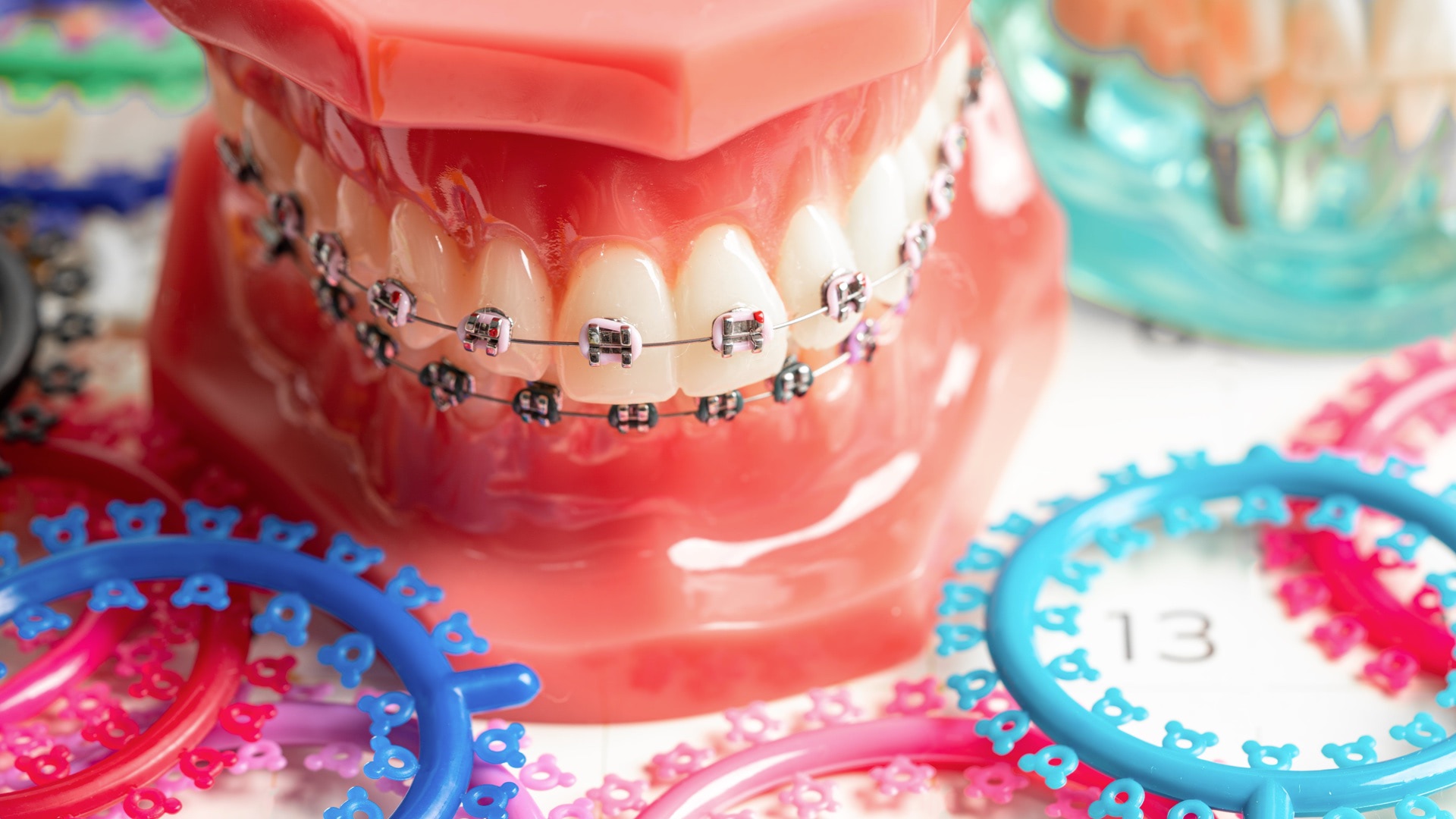
Fixed orthodontic treatment is performed using brackets bonded to the teeth and archwires that connect them.
- Metal Braces: The conventional system is known for its high durability.
- Ceramic Braces: Tooth-colored and aesthetically advantageous.
- Lingual Braces: Archwires are placed on the lingual surface of the teeth, making them invisible from the outside.
These systems are particularly effective in complicated orthodontic cases and ensure complete control over tooth movement.
Clear Aligner Treatment (Invisalign)
Clear aligners are custom-designed removable appliances. The oral cavity is scanned in three dimensions using a digital scanning system, and then tooth movements are planned at each stage in a digital environment. Each aligner moves the teeth by about 0.25 mm and is worn for 10-14 days.
Advantages include:
- Invisible design,
- Easy cleaning,
- Comfortable usage
However, clear aligners may not be as effective as conventional braces in severe jaw discrepancies.
Treatment Duration and Process
The duration of orthodontic treatment varies depending on the severity of the malocclusion, the patient’s age, and their compliance with the treatment. Typically, treatment lasts 12 to 24 months. Minor corrections may be completed in 6 months, while jaw discrepancies can take up to 2 years. The treatment process generally involves the following steps:
- Clinical examination and panoramic radiograph/X-ray
- Digital impressions or 3D scanning
- Treatment planning
- Placement of brackets or aligners
- Regular follow-ups and adjustments
Follow-up appointments are scheduled on average every 4 to 8 weeks. During this period, tooth movement is monitored, and braces or aligners are adjusted or replaced as needed.
Post-Treatment Phase and Retention
Once orthodontic treatment is completed, the teeth have moved into their new positions; however, a retainer period is necessary to ensure the stability of these results. During this period, fixed or removable retainers are used.
- Fixed retainer: A thin wire bonded to the lingual surface of the teeth.
- Removable retainer: Protective clear aligner-like retainers worn at night.
The retention period generally lasts 1–2 years. During this time, regular dental examinations are important to maintain the long-term stability of the treatment results.
Daily Life and Oral Hygiene
During orthodontic treatment, good oral hygiene is essential to maintain dental health. Since plaque accumulation can easily occur around braces or aligners, the risk of gingival inflammation and tooth decay may increase. Therefore:
- A soft-bristled toothbrush and an interdental brush should be used.
- Sugary and sticky foods should be avoided.
- Clear aligners should be cleaned after every meal.
After treatment, regular use of night retainers and routine dental examinations are necessary to maintain the teeth in their ideal positions.
Orthodontics is an important field of dentistry that protects oral and jaw health and goes beyond aesthetic improvement. Thanks to conventional bracket systems, digital treatment planning, and clear aligner technologies, suitable solutions can be provided for patients of all age groups. Regular examinations, good oral hygiene, and treatment adherence are key factors in achieving long-term treatment success.